Kevin Dela Rosa in clear glasses and a blue jacket in front of a brick wall
Kevin Dela RosaCTO, Cloudglue

I work on the final mile of AI.

Model training gets most of the praise, but in the lab you control the lighting, the population, and the dataset. In real life people take vertical photos when your training data was landscape, and read an accurate system that takes too long as broken. I’ve worked in that gap since leaving Carnegie Mellon.

At Amazon my team was the authority on what makes a thing a thing across the catalog. At Snap I built the pipelines, GPU scheduling, search, OCR, and classifier cascades behind Scan for hundreds of millions of Snapchatters, and grew the ML infrastructure team from zero to ten. Since 2024 I’ve been CTO of Cloudglue, bringing what worked for text and images to video.

I started in research at NIST and Carnegie Mellon and have published 23 papers since. Many fixes I used to make after the fact are now made further up the pipeline, where models are trained and aligned, and I’d like to complete the journey from that end too.

Selected work

Diagram of three seller listings passing through ID, rule, and ML checks to become one product page

2011–2016 · Amazon · Software Development Engineer

What makes a thing a thing

One page per product is what separates Amazon’s catalog from marketplaces that show a page per seller listing, and my team was the authority on whether two listings were the same item. The catalog changed constantly through a dozen intake systems, so we ran a hybrid of rules and ML over large lookup tables and search indices. I built tiered decision logic that runs the quickest, most differentiating checks first, and extractors that pull part numbers, barcodes, and brand names out of free text. When deep learning arrived I led the Hadoop and Spark pipelines that added image signals: first perceptual hashing, which caught many of the near-duplicates, then CNN embeddings. Before that I worked on an engine for long-running distributed workflows, the kind of system Temporal has since made popular.
2016–2024 · Snap · KubeCon 2020, AWS re:Invent 2019

ML infrastructure

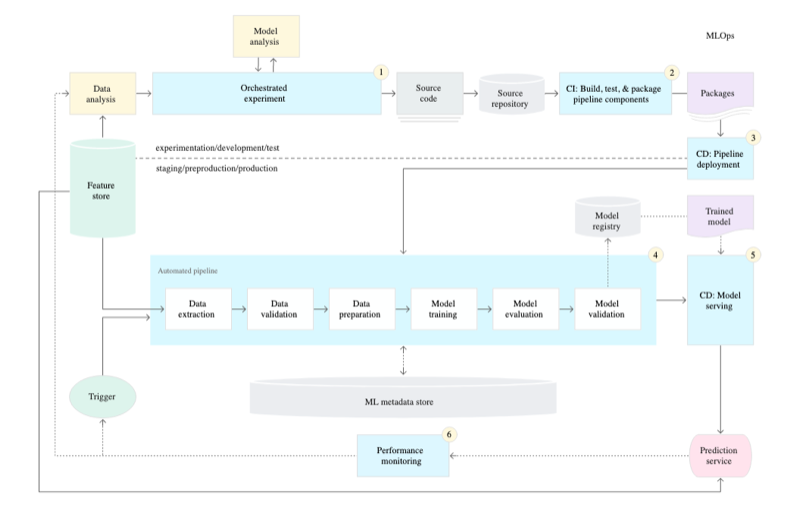
I took what I learned on call for those global systems to Snap, where the problem was getting GPUs to show up at the right time. I built Kubernetes infrastructure that schedules each model’s mix of hardware across bulk jobs and bursty live traffic, and grew the team from zero to ten. We ran continuous labeling, training, evaluation, and deployment on Kubeflow and Spinnaker, and the nearest-neighbor search and Story Explorer dataset platform behind 30+ ML use cases.

2016–2024 · Snap · Staff ML Engineer and Tech Lead Manager

Scan, visual search, and OCR

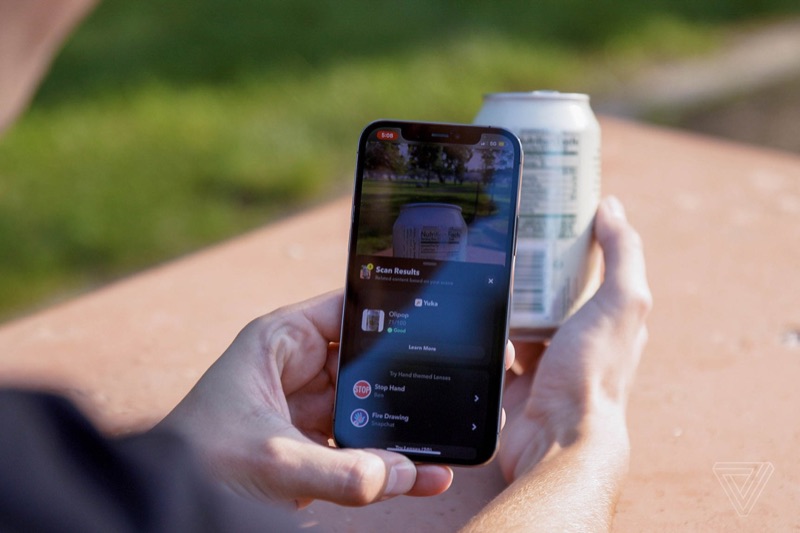
That infrastructure existed to put models in front of Snapchatters, and models promised to work out of the box rarely did on real Snaps. People asking “what is this?” were usually holding the object, so we built a dataset of things in hands and grew it with similarity search. The same search bootstrapped training data for concepts that appeared overnight, like face masks in 2020. Scan had more than 50 analyzers, too many to run on every frame, so the tiered checks from Amazon came back: cheap classifiers threw out blurry or empty frames, then routed each scan to the few models that applied. I led the in-house OCR system for emoji and burned-in text, which ran billions of inferences and cut cost 99% compared with Google’s service. Some fixes were not models at all: an animation hid the wait during a scan, and we showed neutral results in place of labels, such as gender, that could expose bias.

2023 and 2026 · NeurIPS Datasets and Benchmarks, open source

FORB, and a rematch on a phone

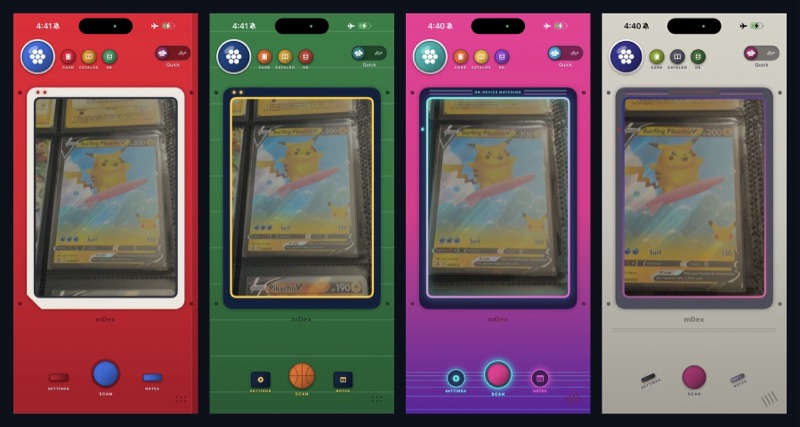
Visual search raised a measurement problem. Benchmarks were built around 3D objects, and much of what people scan is flat: logos, book covers, paintings, trading cards. FORB is the benchmark we published for that case. Three years later I gave it a rematch on mobile hardware. mDex is an offline iPhone scanner over 10,023 trading cards, and its open-source matcher compares 46 mobile-deployable pipeline variants with a harness that reproduces every table.

2024–2025 · Cloudglue · SIGIR MRR Workshop, AAAI Agent4IR

Video RAG and RAVEN

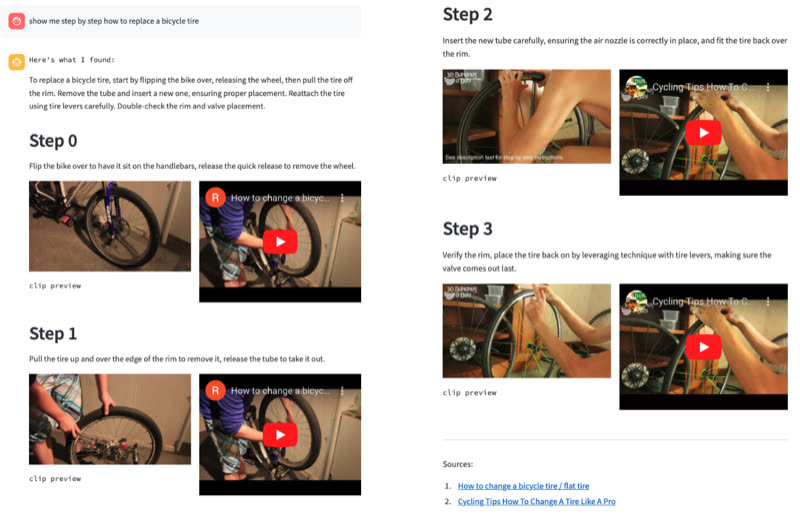
At Cloudglue the bet was that what worked for text and images has an analog in video. Retrieval-augmented generation has one: aligned visual captions give a compact text form of what’s on screen, so an assistant doesn’t reload frames for every question. Structured output has one too: RAVEN infers a collection’s themes, writes an entity schema for it, and extracts structured entities across visual, audio, and text.

2025 · ICCV Multimodal Representation and Retrieval Workshop

Smart Routing for Multimodal Video Retrieval

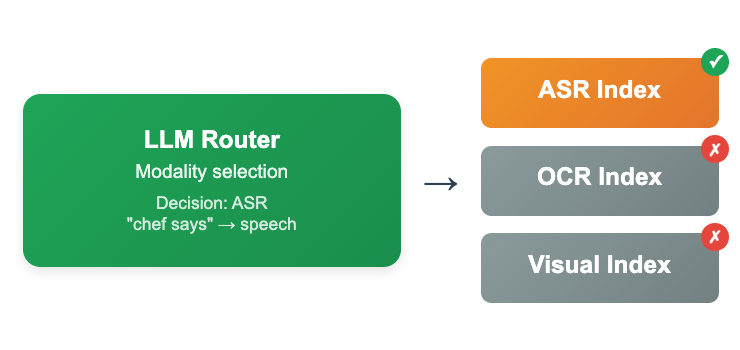
With speech, on-screen text, and visual indices in place, searching all of them for every query is expensive, the same problem as Scan’s 50 analyzers. Speech alone isn’t enough either: 34% of clips had on-screen text the transcript missed. ModaRoute uses an LLM to send each query only to the indices it needs. Across 1.8M clips it cut compute by 41% at 60.9% Recall@5. Dense captions reach 75.9% but cost far more to produce, and the paper is about that trade-off.

2024 to present · Cloudglue · CTO · ACM CAIS AgentSkills

Tinycloud and Tool-Skills vs. Workflow-Skills

A router picks an index; an agent has to pick and combine tools. Tinycloud is the harness I built for that. It exposes video perception and retrieval as tools, scriptable commands, and fixed workflows, on a runtime with persistent sessions, tool permissions, checkpointed jobs, and offline and live evaluations. The paper is a case study of the harness: how handing an agent single tools versus prepackaged workflows changes the way it routes and composes them.

2026 · DEF CON 34 Demo Labs, ECCV Demos · Creator

Overcast

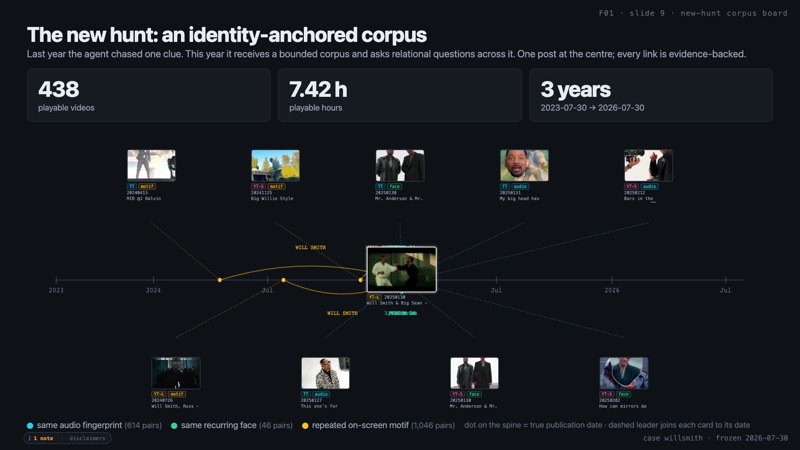
Overcast applies the same idea in the open: a command-line agent that can search, listen, read, match, map, and remember across a collection of video. The question running through it is which outputs count as evidence and which are only leads. An OCR hit is an observation, a face-cluster match is a ranked guess, and generated reconstructions are quarantined so they can never trigger a finding. The write-up states its limits too: scraped captions are a live prompt-injection vector, and the agent runs without a sandbox.

2026 · CoRL Memory for Robot Foundation Models Workshop

Evidence-Gated Memory

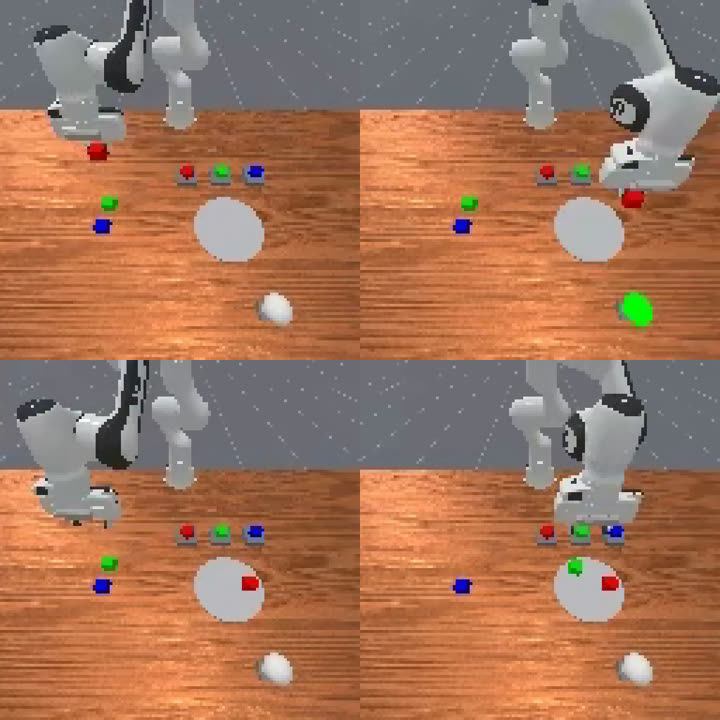
An agent that remembers raises the next question: when should its memory be trusted? Memory has to keep a fact after it leaves view, revise it when the world changes, and surface the right evidence later. This paper tests each demand separately with rule-based policies, replaying recorded robot histories through a frozen Qwen2.5-VL-7B writer and reader. Keeping the source frame beat a 128-token text rewrite of it (98% vs. 34% on a transient cue), and the writer lost a stored fact at its first rewrite without new evidence, which a copy-if-no-evidence rule prevents. It is an offline diagnosis, not closed-loop control.

· 22 min read

I put every CSI button in a CLI

Building Overcast: the real algorithms behind the hacker-movie tropes, connected to an agent that remembers.

· 8 min read

How to grep video

Why transcripts aren't enough, and how structured representations make video searchable by agents.